| Home | Lectures | Notes | Images | Flashcards | Case of the Week Archives |
 | Bone | Cardiac | Chest | GI | Miscellaneous | Med Students | Most Common Lists |


Ascariasis
 

  • Most common parasitic infestation in the world

  • Most common in children ages 1 to 10 years

  • Most often found in distal small bowel

  • Life cycle

    • Infection is through contaminated soil

    • Involves GI tract of host twice

      • First time as egg

    • Migrates through lungs

    • Adult travels up trachea

      • Returns to GI tract for maturation (2 months)
         

  • Signs and Symptoms
     

    • Colicky pain

    • Hematemesis

    • Eosinophilia
       

  • X-ray findings
     

    • Long, tubular filling defects, especially in distal small bowel

    • The worm ingests barium and the barium may be seen as a thin line of contrast in the center of the worm
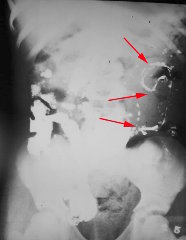
      • Especially after the remainder of the barium exits the small bowel.  See below (streak of barium in LUQ):

    • Ball of worms  
       

  • Complications

    • Appendicitis

    • Jaundice (if bile ducts are involved)

    • Pneumonia

    • Bowel perforation

    • Mechanical obstruction


| Home | Lectures | Notes | Images | Flashcards | Case of the Week Archives |
 | Bone | Cardiac | Chest | GI | Miscellaneous | Med Students | Most Common Lists |

Copyright © 2002 LearningRadiology.com
