|
|
Multiple Myeloma
-
Clinical
-
Average age
is 60-70
-
Men much
more common than women
-
Most have an
elevated serum protein with 80-90% in the globulin fraction, especially
IgG
-
Bence-Jones
protein in 40-60% of patients (light chains)
-
X-ray
findings
-
Osteoporosis
is most common skeletal abnormality in this disease
-
Lesions are
usually multiple and found in vertebrae, ribs, skull, pelvis, and femur
-
Over 50% of
solitary lesions are found in vertebrae
-
Mandible
involved in 1/3 of patients with diffuse involvement
-
Widespread
lucencies in bone
-
Distinctive
to MM are the lucent, elliptical, subcortical shadows, especially in long
bones=endosteal scalloping
-
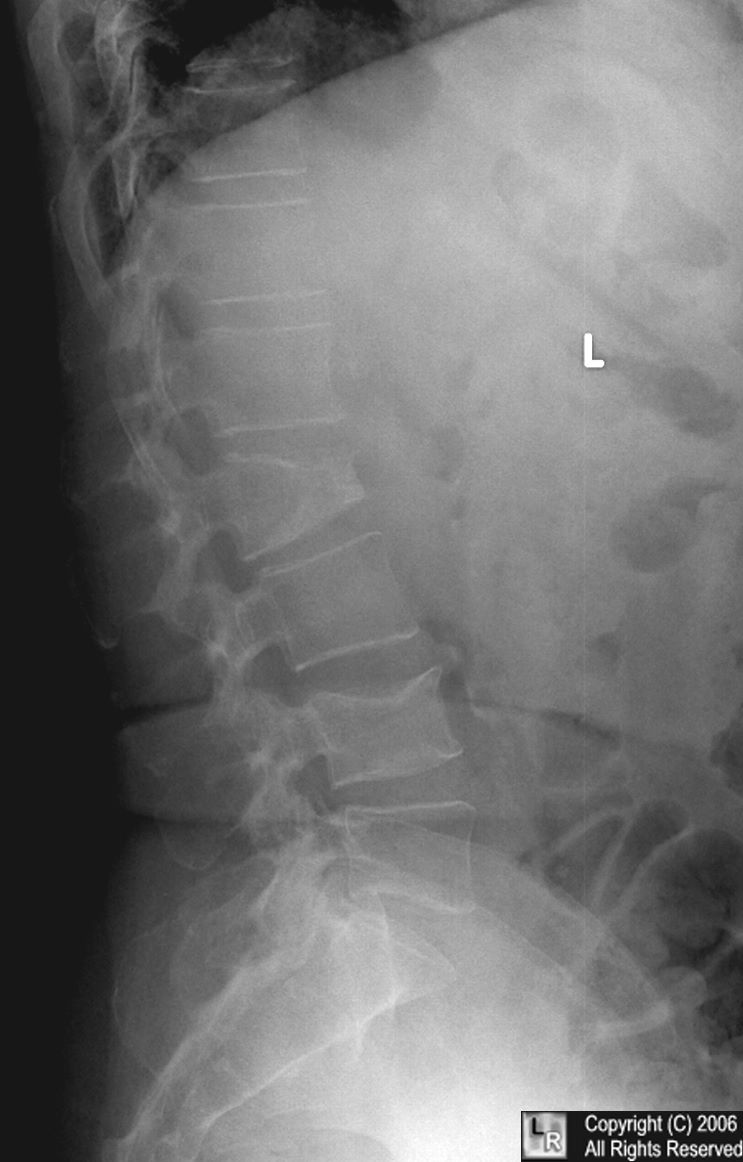
In spine, MM
destroys body and spares pedicle
-
DDX: mets and
disuse osteoporosis
-
MM is more
widespread
-
More discrete
holes in MM
-
Large foci
of coalescence more often due to mets
-
Severe disuse
osteoporosis may simulate bone changes of MM
-
Sclerosis is
usually seen only with treatment or fracture
-
Most believe
that almost all patients with a solitary plasmacytoma will develop
multiple myeloma
-
Solitary
plasmacytoma produces “soap-bubbly” expansile, septated lesion, when
characteristic
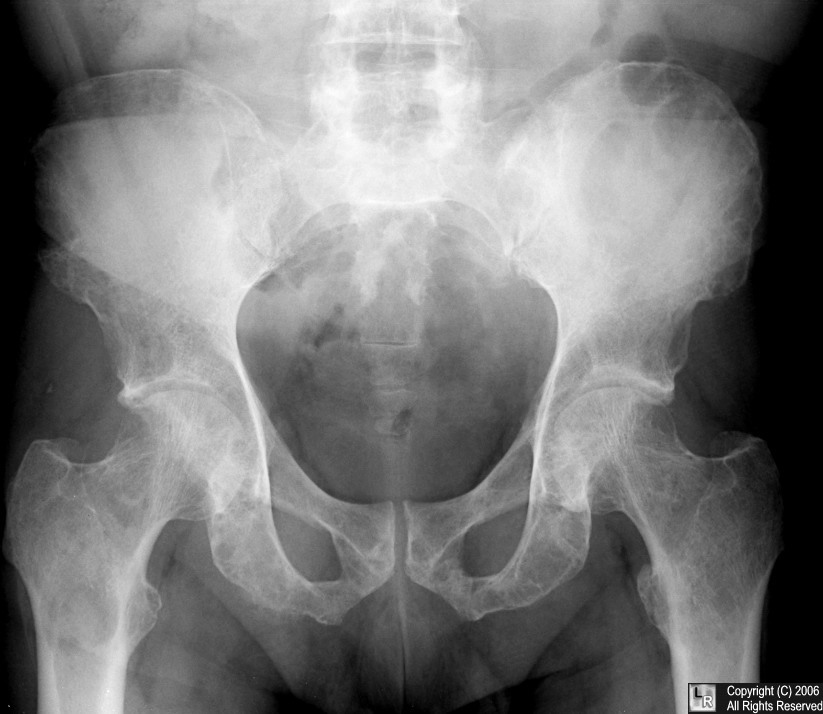
Multiple myeloma. The pelvis contains numerous lytic lesions without reactive sclerosis which
have an almost
"soap-bubbly" appearance in the ischia. There are also lytic lesions in
both proximal femora.
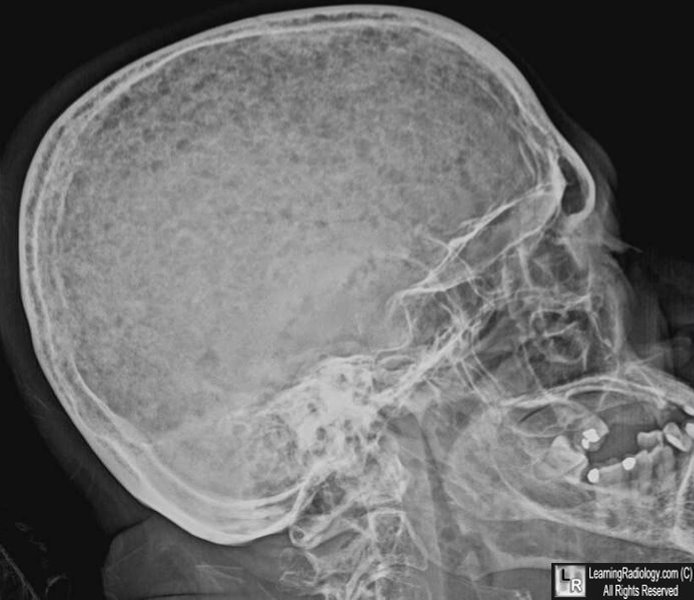
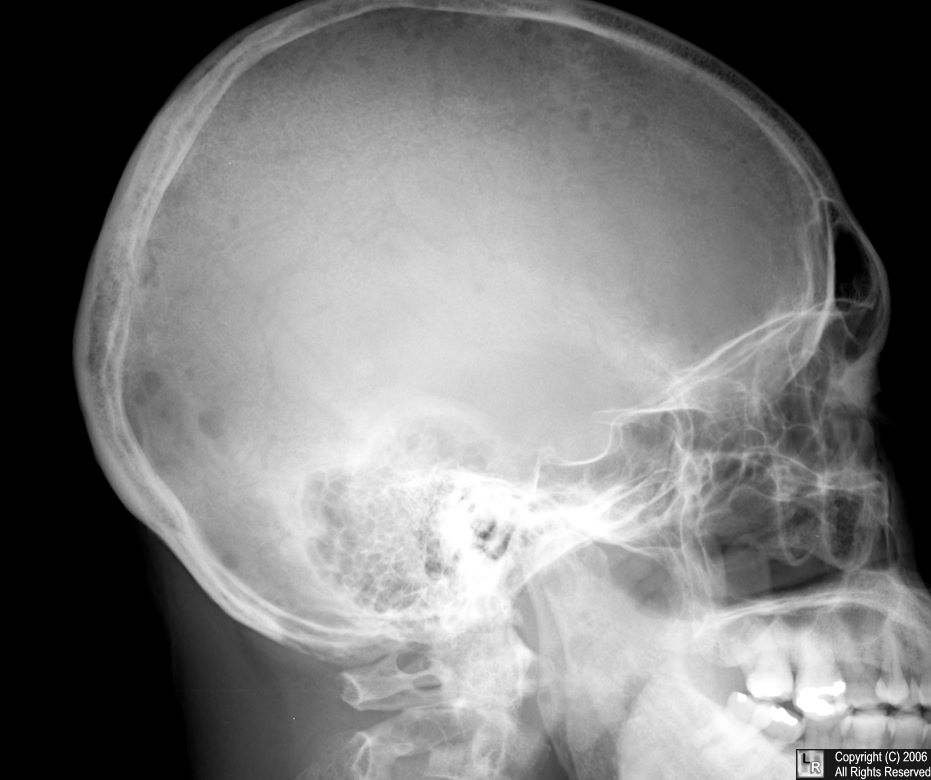
Multiple myeloma. The skull contains innumerable small lytic lesions of more-or-less uniform size. This has been likened to an "oil-droplet" appearance. Metastases are generally fewer in number and of different sizes and shapes.
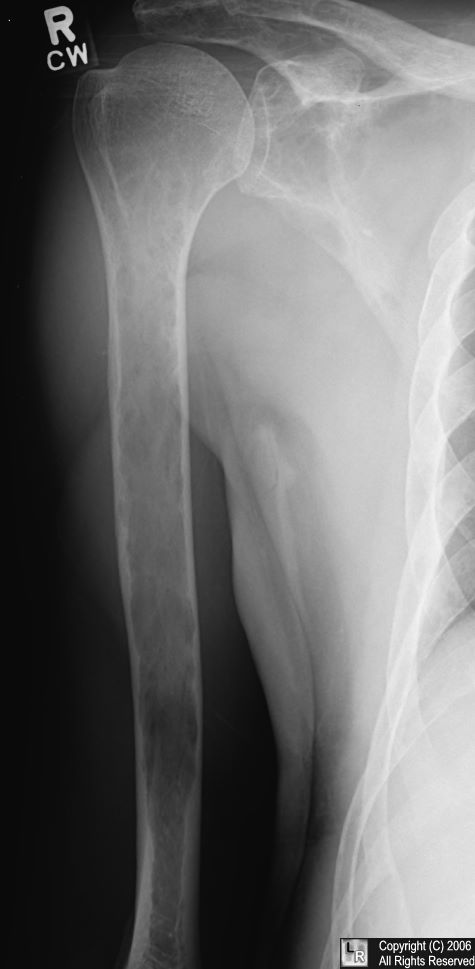
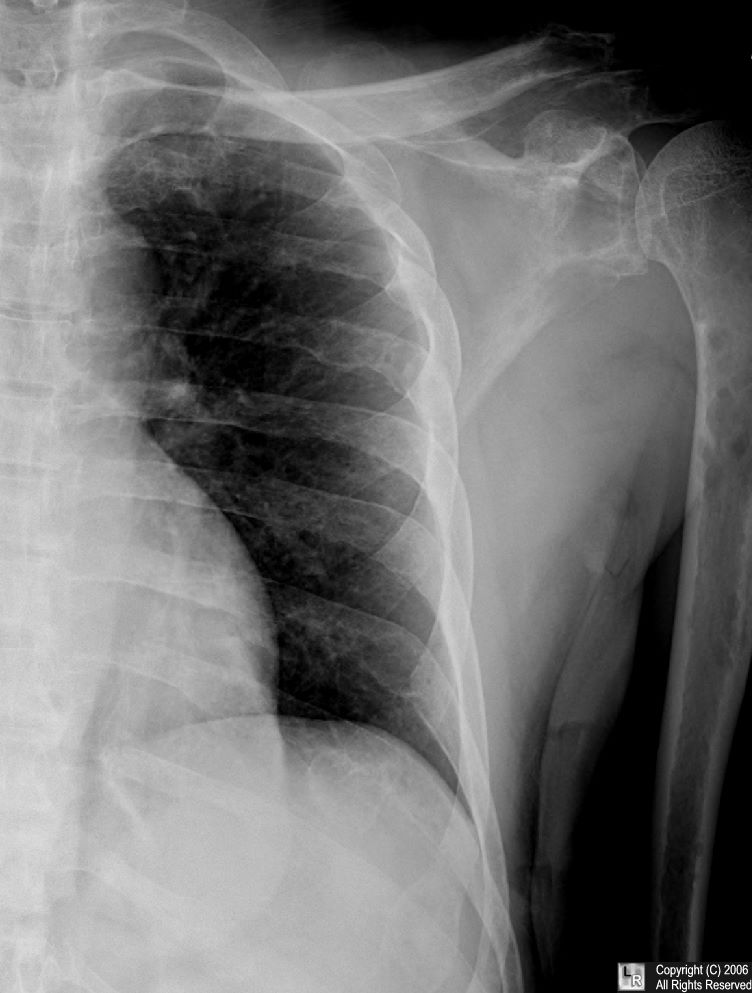
Other examples of Multiple Myeloma (Mouse over to enlarge)
|
|
|
