|
|
Polycystic Ovary Syndrome (PCOS)
Stein-Leventhal Syndrome
General Considerations
- Polycystic ovary syndrome (PCOS), also known as, Stein-Leventhal syndrome, includes
- Polycystic ovaries
- Obesity
- Hirsutism
- Infertility
- Women with PCOS have abnormalities in the metabolism of androgens and estrogen and in the control of androgen production
- Elevated androgen levels can be of ovarian (eg, testosterone, androstenedione) or adrenal (dehydroepiandrosterone sulfate) origin
- The luteinizing hormone level is elevated, with reversal of the LH/FSH ratio as LH becomes higher than FSH throughout the menstrual cycle
- PCOS is also associated with peripheral insulin resistance
- Approximately 10% of women who are obese and have PCOS also have type 2 diabetes mellitus by age 40 years
Clinical
- The minimal criteria proposed for the diagnosis of PCOS include
- Menstrual dysfunction
- Evidence of hyperandrogenism, whether clinical (eg, hirsutism, acne, male pattern balding) or biochemical (elevated androgen level and other causes of hyperandrogenism must be excluded)
Imaging
- Ultrasound is the imaging modality of choice
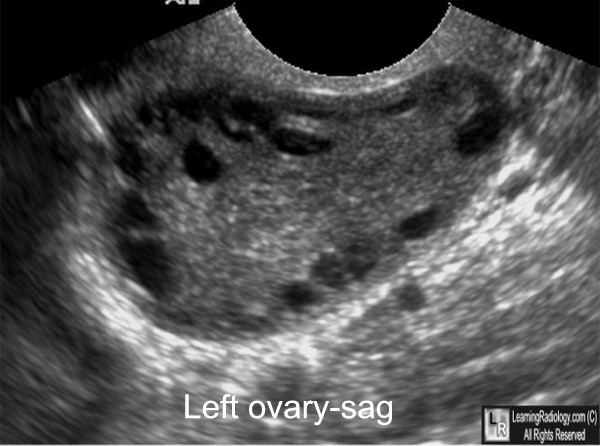
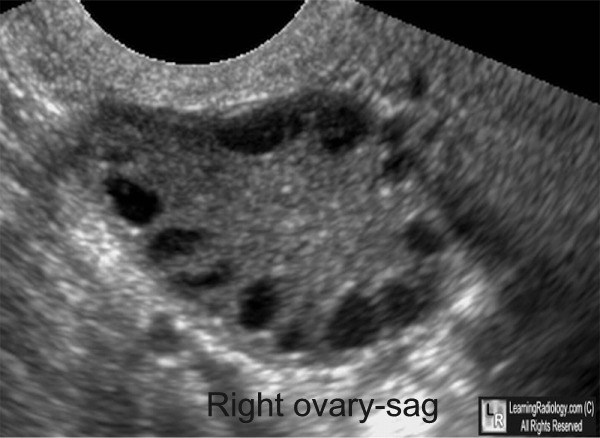
- Polycystic ovaries are enlarged and rounder than normal with increased stromal echogenicity
- There are numerous small cysts, less than 5mm, that line up on the periphery, in a “string-of-pearls” appearance
- Ultrasonographic criteria for establishing the diagnosis of PCOS are 10 or more cysts that are 2-8 mm in diameter and are peripherally arranged around an echodense stroma
Treatment
- May include diet, activity and Metformin, an anti-diabetic drug
- Also spironolactone, eflornithine (to treat hirsutism) and oral contraceptives
- >Ovarian wedge resection is used less often now
- Laparoscopic surgery reduces the rate of adhesion formation
Complications
- May have increased risk of cardiovascular and cerebrovascular disease
- Type 2 diabetes mellitus
- Increased risk for endometrial carcinoma


Polycystic Ovary Syndrome. White arrows point to multiple cysts that ring the periphery of both ovaries.
For these same photos without the arrows, click here and here
For more information, click on the link if you see this icon 
eMedicine Jordan G Pritzker, MD
|
|
|