|
|
Emphysematous Pancreatitis
- Severe
complication of acute pancreatitis
- Pathophysiology
of pancreatitis is a chain of events that result from blockage of the
pancreatic duct with subsequent release of pancreatic enzymes into the
interstitium of the gland
- Most
common etiologies of acute pancreatitis are cholelithiasis and alcoholism
- If
necrosis occurs, it tends to occur early in course of disease
- Diagnosis
depends upon clinical presentation and presence of gas in retroperitoneum
- Diagnosis
of necrosis
- Focal
or diffuse
- Well-marginated
- Area
of parenchymal non-enhancement
- >3cm
- Infected
pancreatic necrosis recognized at helical CT as
- Bubbles
of gas within areas of pancreas
- Or,
collection of gas and tissue within the retroperitoneum
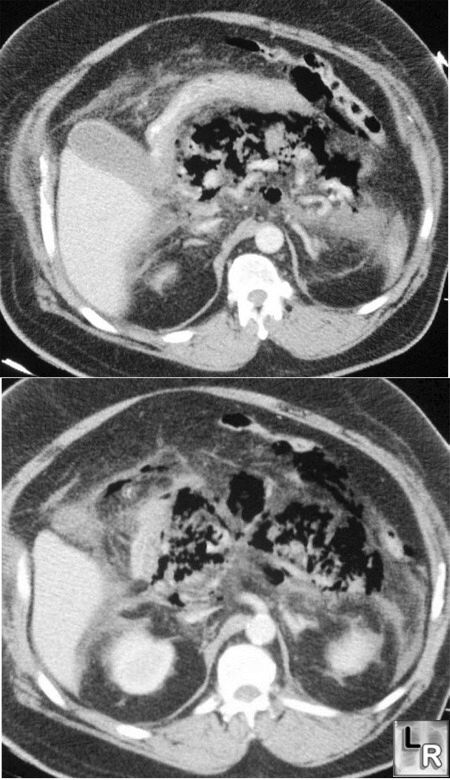
Emphysematous Pancreatitis. Axial, enhanced CT scans of the upper abdomen show
extensive gas in the region of the body and
tail of the pancreas with infiltration of the peripancreatic fat
- E. Coli
can infect necrotic pancreas
- Produces
gas in body of pancreas and retroperitoneum
- Emphysematous
pancreatitis warrants
- Early
use of antibiotics
- Percutaneous
drainage of fluid collections
- If
no response
- Surgical
resection of infected necrotic tissue
- Carries
grave prognosis
|
|
|
