|
|
Meconium Aspiration Syndrome
- Most common cause of neonatal respiratory distress
in full-term/postmature infants
- Hyaline membrane disease most common cause in
premature infants
- Etiology
- Fetal circulatory accidents/placental
insufficiency /postmaturity result in perinatal hypoxia and fetal
distress
- Meconium defecated in utero triggered by vagal
response
- Pathogenesis
- Meconium products produce bronchial obstruction
and air-trapping
- Chemical pneumonitis
- Incidence
- 10% of all deliveries have meconium-stained
amniotic fluid
- 1% of all deliveries have respiratory distress
- Clinical findings
- Cyanosis (rare)
- Large infant
- Meconium staining
- Imaging findings
- Bilateral diffuse grossly patchy opacities
(atelectasis and consolidation)
- Hyperinflation of lungs
- Areas of emphysema (air-trapping)
- Spontaneous pneumothorax and pneumomediastinum
- Small pleural effusions (20%)
- No air bronchograms
- Rapid clearing usually within 48 hours
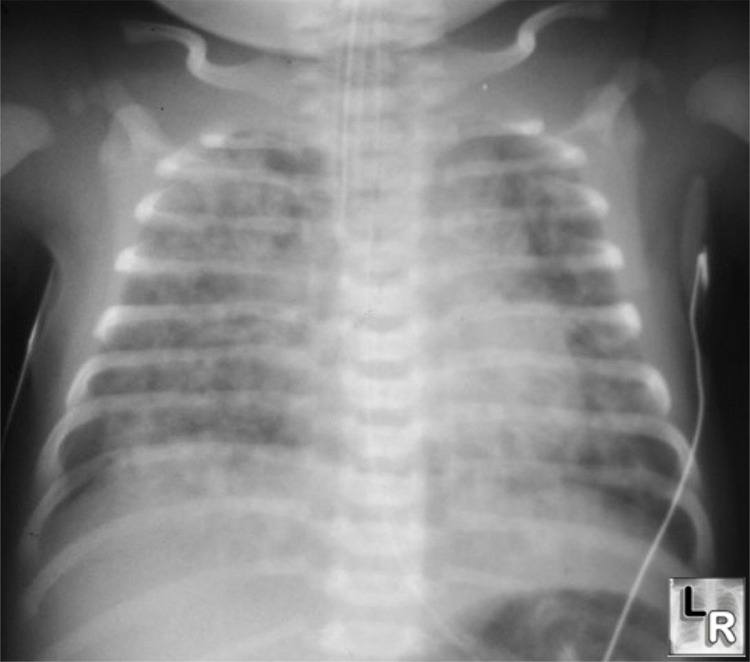
Meconium Aspiration Syndrome. Frontal chest shows large, ropey and strand-like
densities in
a post-mature infant consistent with Meconium Aspiration Syndrome
- Treatment
- Supportive
- Antibiotics and oxygen
- ECMO can be used
- Complications
- Morbidity from anoxic brain damage is high
|
|
|
